
A New Antibiotic Is Good News. It Is Also a Reminder of a Larger Problem.


The U.S. Food and Drug Administration has approved Utebzi, a new oral antibiotic for complicated urinary tract infections, including pyelonephritis, a type of kidney infection. This drug is the first oral carbapenem approved for this use, giving physicians a new option in a class of antibiotics often reserved for serious, drug-resistant Gram-negative infections.
Carbapenems are powerful antibiotics, but they have generally required intravenous administration, so this new drug being an oral antibiotic is a big step. Previously, for some patients, taking carbapenems meant remaining in the hospital, visiting an infusion center, or arranging home IV therapy. An oral option simplifies treatment for stable patients and potentially helps some hosptialized patients leave the hospital sooner.
This is a fantastic breakthrough, but it also draws attention to why we keep needing new antibiotics in the first place.
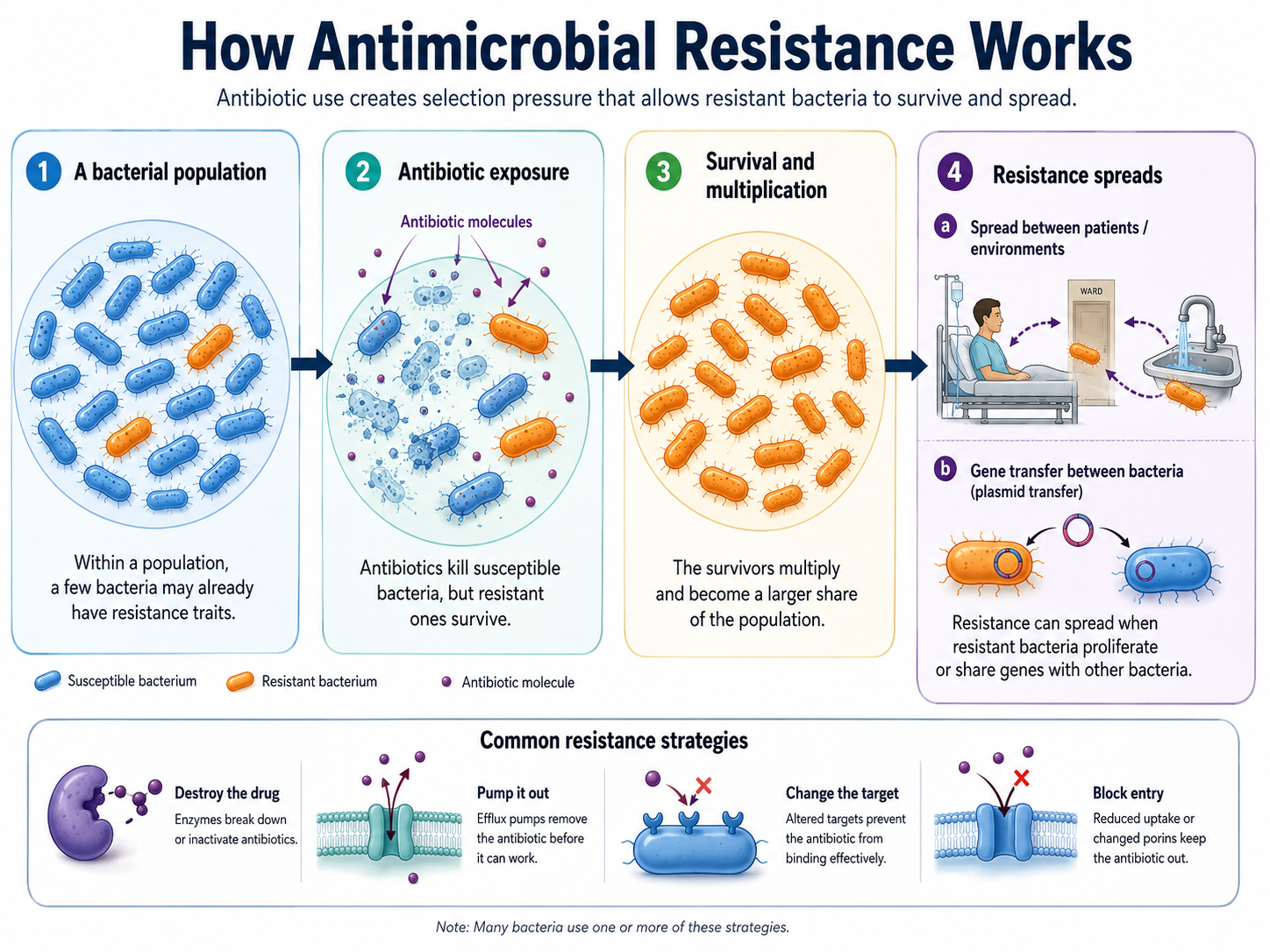
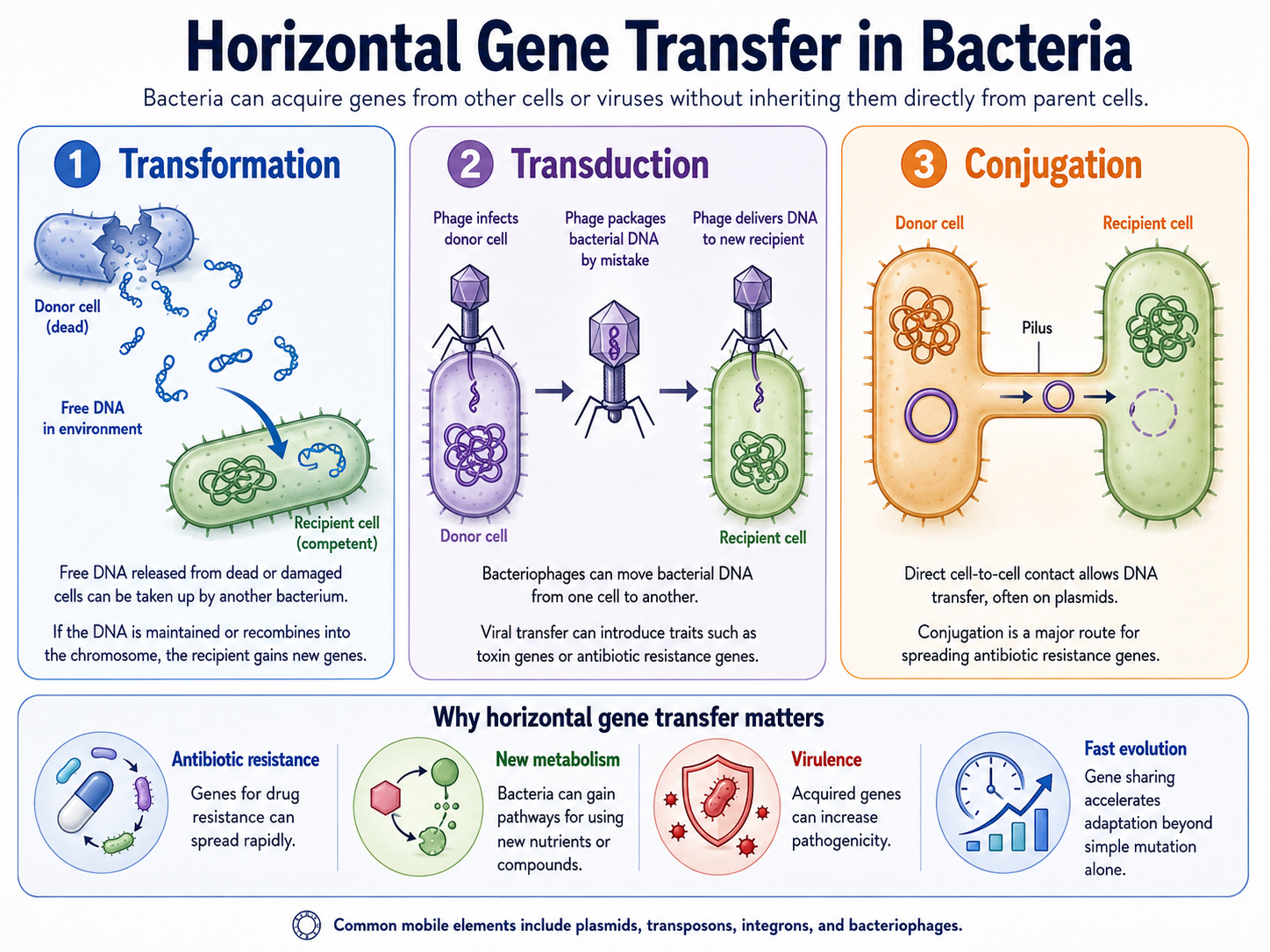
Antimicrobial resistance, or AMR, occurs when microorganisms evolve ways to survive drugs that once controlled them. In bacteria, resistance can arise through random mutations or through the acquisition of resistance genes from other cells by horizontal gene transfer.
These resistance traits help bacteria avoid the effects of antibiotics in several ways. Some bacteria pump the drug out of the cell. Others alter the antibiotic’s target, break the drug down with enzymes, or prevent the drug from entering the cell in the first place.
When an antibiotic is used, susceptible bacteria are killed or suppressed, while resistant bacteria are more likely to survive. Over time, these survivors can multiply and become a larger share of the population. They may also pass resistance genes to other bacteria that were not previously resistant, allowing resistance to spread through the broader microbial community. When this happens, members of the community that were at one point killed by an antibiotic quickly became resistant to it.
The World Health Organization describes AMR as one of the top global public health and development threats. In 2019, bacterial AMR was estimated to be directly responsible for 1.27 million deaths worldwide and associated with 4.95 million deaths. In the United States, the CDC estimates that more than 2.8 million antimicrobial-resistant infections occur each year, causing more than 35,000 deaths.
UTIs are a useful window into this problem because they are common, familiar infections. Most uncomplicated UTIs can still be treated effectively. But complicated UTIs are different. They are more likely to occur in patients with additional risk factors and carry a higher risk of treatment failure. When the bacteria involved are resistant to standard antibiotics, clinicians may have to move toward broader, stronger, or more difficult-to-administer drugs.
That is why Utebzi is meaningful. It does not solve the antimicrobial resistance issue, but it adds a tool in a space where tools are badly needed. However, the WHO has warned that the antibiotic pipeline remains inadequate relative to the rising burden of resistance, with too few truly innovative drugs in development for priority pathogens.
A new antibiotic is not an excuse to relax stewardship. It is a reminder of why stewardship matters. New drugs represent years of microbiology, chemistry, clinical testing, and regulatory work. But every new antibiotic enters the same evolutionary contest. Microbes reproduce quickly, exchange genes, and respond to the selective pressure we place on them. They have billions of years of practice fighting against anything that wants to destroy them. The more casually we use antibiotics, the faster we teach microbial populations how to survive them. So in addition to discovering the next good antimicrobial, we need to preserve the drugs we already have, use new ones wisely, create social and physical infrastructure to prevent infections when possible, and keep building a drug discovery pipeline strong enough for the microbial world we actually live in.