Specimen of the Month July 2026 - Anaerobic Gut Fungi: The (Forgotten) Fungi I Never Thought I'd Write About

I'll admit it … I’ve spent most of my academic career completely ignoring all things fungi.
As an anaerobic microbiologist and microbial systematist, I was perfectly content cultivating bacteria that perish upon exposure to oxygen and describing new members of the bacterial tree of life ... fungi simply weren't my thing. Then I joined the Elshahed–Youssef Laboratory at Oklahoma State University for my postdoctoral research and was introduced to one of the most extraordinary groups of organisms I'd never really appreciated: the anaerobic gut fungi (AGF).
The more I learned, the more I realized that these fungi deserved far more attention than they receive.
When most people think of fungi … mushrooms, molds, or yeast usually come to mind, and rightfully so. Few realize that an entire branch of the fungal tree of life has evolved to do something once thought impossible: thrive in the complete absence of oxygen.
Meet the AGF, members of the phylum Neocallimastigomycota. These obligately anaerobic fungi inhabit the digestive tracts of herbivorous animals (sorry to report here, not humans), where they are among the first microbes to attack difficult-to-digest plant fibers. These AGF physically invade plant tissue using an extensive rhizoid network while producing an impressive array of enzymes capable of degrading cellulose and hemicellulose. Without them, many herbivores would struggle to extract nutrients from grasses, leaves, and other fibrous plant material.
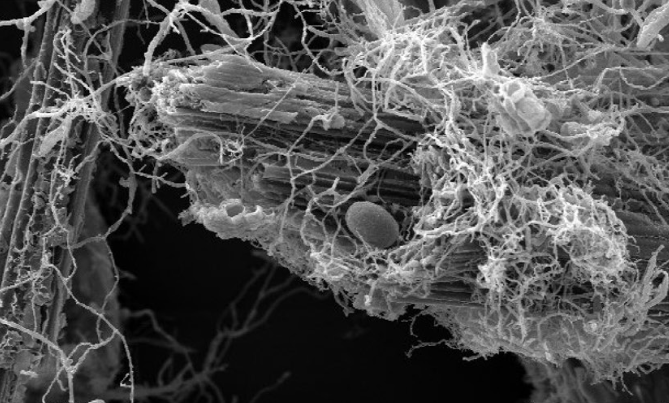
Ironically, AGF were first observed well over a century ago, but nobody realized what they actually were. Their swimming, flagellated zoospores were originally mistaken for protozoa in the early 1900s. It wasn't until the pioneering work of Colin Orpin in the 1970s that these mysterious microbes were finally recognized as fungi, overturning a long-held belief that all fungi required oxygen for life. Researchers soon discovered that these fungi lack conventional mitochondria, instead possessing specialized organelles known as hydrogenosomes, which allow them to generate energy without oxygen and flourish in completely anoxic environments.
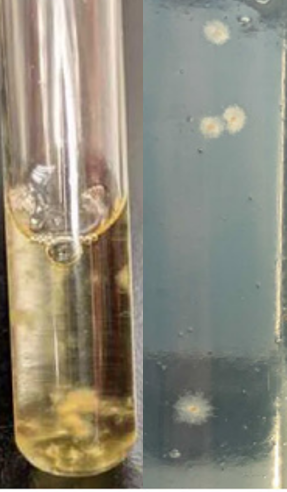
The story of AGF is still being written. Today, approximately 20 genera and around 40 formally described species exist. However, these cultured representatives are certainly just the tip of the AGF iceberg. Advances in DNA sequencing have recently revealed numerous additional evolutionary lineages that have never been grown in the laboratory and likely represent entirely new genera awaiting cultivation and formal description. Every year, it seems the phylogenetic tree of the Neocallimastigomycota gains a few more branches.
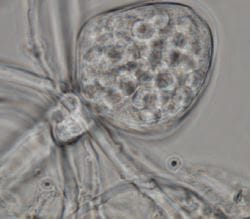
Equally exciting is where we now find them. For decades, AGF were thought to be restricted to the rumen and hindgut of mammalian herbivores such as cattle, sheep, goats, horses, and elephants. However, recent research has dramatically expanded that view. They have now been detected and successfully cultivated from ratites (ostriches) and even reptiles (tortoises), demonstrating that these fungi are not exclusively associated with mammals. Even more remarkably, these discoveries suggest that the partnership between AGF and these herbivorous animals dates back more than 100 million years.
Despite their ecological importance, AGF research is limited to a relatively small community. Only a few hundred researchers worldwide devote a significant portion of their work to understanding these fascinating microbes. Much of that effort is, quite rightly, focused on unlocking the tremendous biotechnological potential of AGF. Their powerful carbohydrate-degrading enzymes are being investigated for applications ranging from biofuel production and biomass conversion to sustainable agriculture and industrial biotechnology.
Among the laboratories helping to redefine what we know about these fungi, the Elshahed–Youssef Laboratory at Oklahoma State University is internationally recognized for its pioneering work in discovering, enriching, cultivating, and characterizing AGF. This group has repeatedly combined culture-independent (sequencing) with classical anaerobic microbiology (growing) to identify previously unknown AGF and bring them to life in the lab. Their work has dramatically expanded the known diversity of the Neocallimastigomycota and radically reshaped our understanding of the evolution of this remarkable fungal lineage.
As someone who has spent most of his career describing novel bacteria, it has been a privilege to have a front-row seat to these discoveries. Watching mysterious DNA sequences become living cultures … and eventually formally described species, has reminded me that there are still entire branches of the tree of life waiting to be explored. This, my friends, is exactly why I (excitedly) get out of bed in the morning to go to work.
These AGF are a reminder that even within the fungal kingdom, there is still plenty of “dark matter” left to illuminate, just some lonely fungi, patiently waiting for someone willing to cultivate them.