The Vampire in the Pond

Specimen of the Month · October 2026
For a green alga, sunlight is a way to make a living. For Vampirovibrio chlorellavorus, it is a way to have someone else make dinner. For this month’s Specimen of the Month, we’re showcasing one of the “spookier” bacteria.
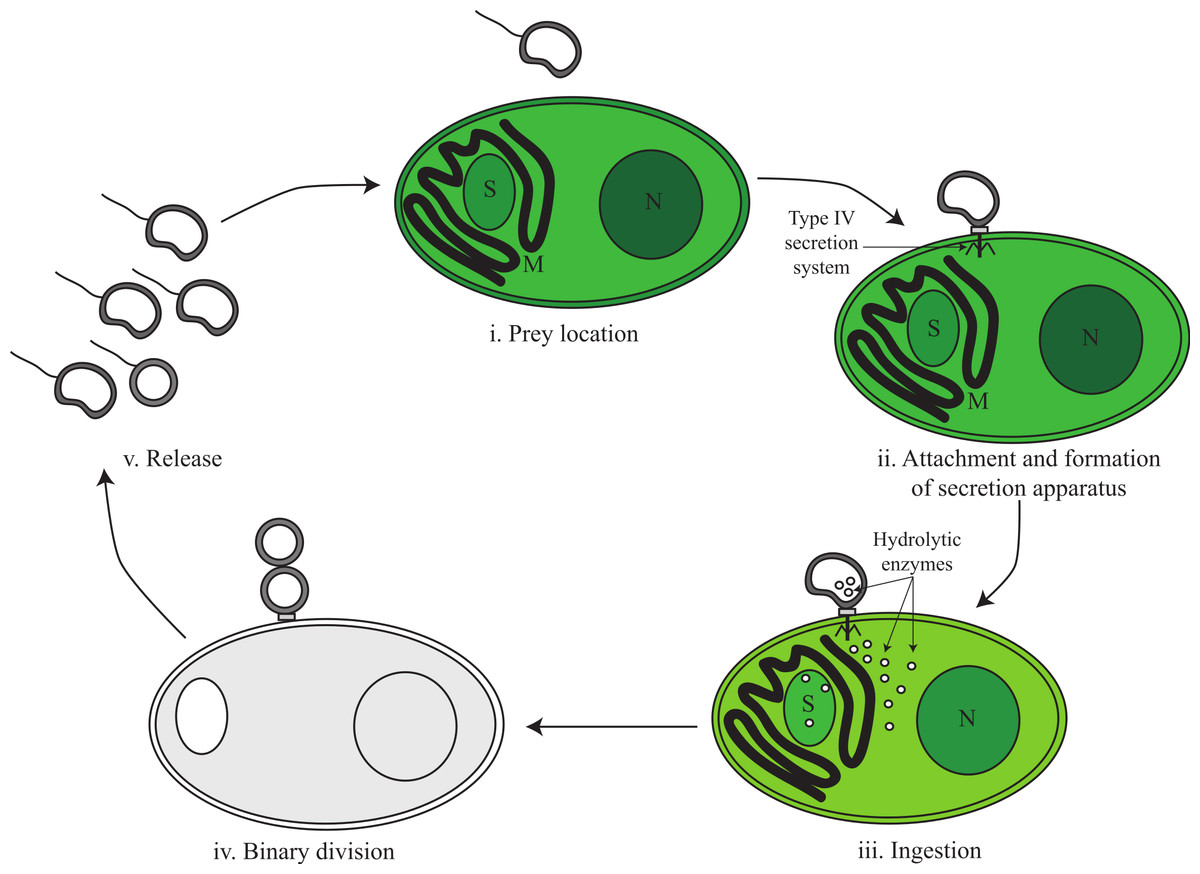
Vampirovibrio chlorellavorus is a predatory bacterium that feeds on Chlorella, a genus of microscopic green algae. It attaches to a living algal cell and consumes its contents, leaving behind an emptied cell wall. Basically, it lets someone else do the hard work of making food via photosynthesis and then pounces. And yes, this is actually why this genus is named Vampirovibrio.
A 2015 genome study offered an explanation for how the bacterium might breach its prey’s defenses. Researchers identified genes for a type IV secretion system, machinery bacteria can use to transfer molecules into other cells. They proposed that Vampirovibrio uses such a system to deliver DNA and digestive enzymes into its prey.
Studying this specimen gives us a useful way to picture microbial life. Often, people don’t think of bacteria as taking part in ecological relationships of this nature. But the ways that bacteria obtain their food are as diverse as the organisms themselves. And if you’re a Chlorella algae, sometimes the ways bacteria eat can be downright spooky.