
Specimen of the Month September 2026: Resplendent Quetzal


The bird that gave a field station its name
Some animals are famous because they are rare. Others because they are beautiful. The Resplendent Quetzal is both, but that still does not fully explain the hold this bird has on people.
A male quetzal in breeding plumage almost does not look real. His body is brilliant green, his chest is deep red, and the long upper tail coverts trailing behind him can make him look less like a bird and more like a piece of cloud forest that learned how to fly. In Mesoamerica, the quetzal has long carried cultural meaning, appearing in stories, symbols, national identity, and local imagination. In Costa Rica’s highland cloud forests, it also carries something more immediate: the future of a fragile ecosystem.
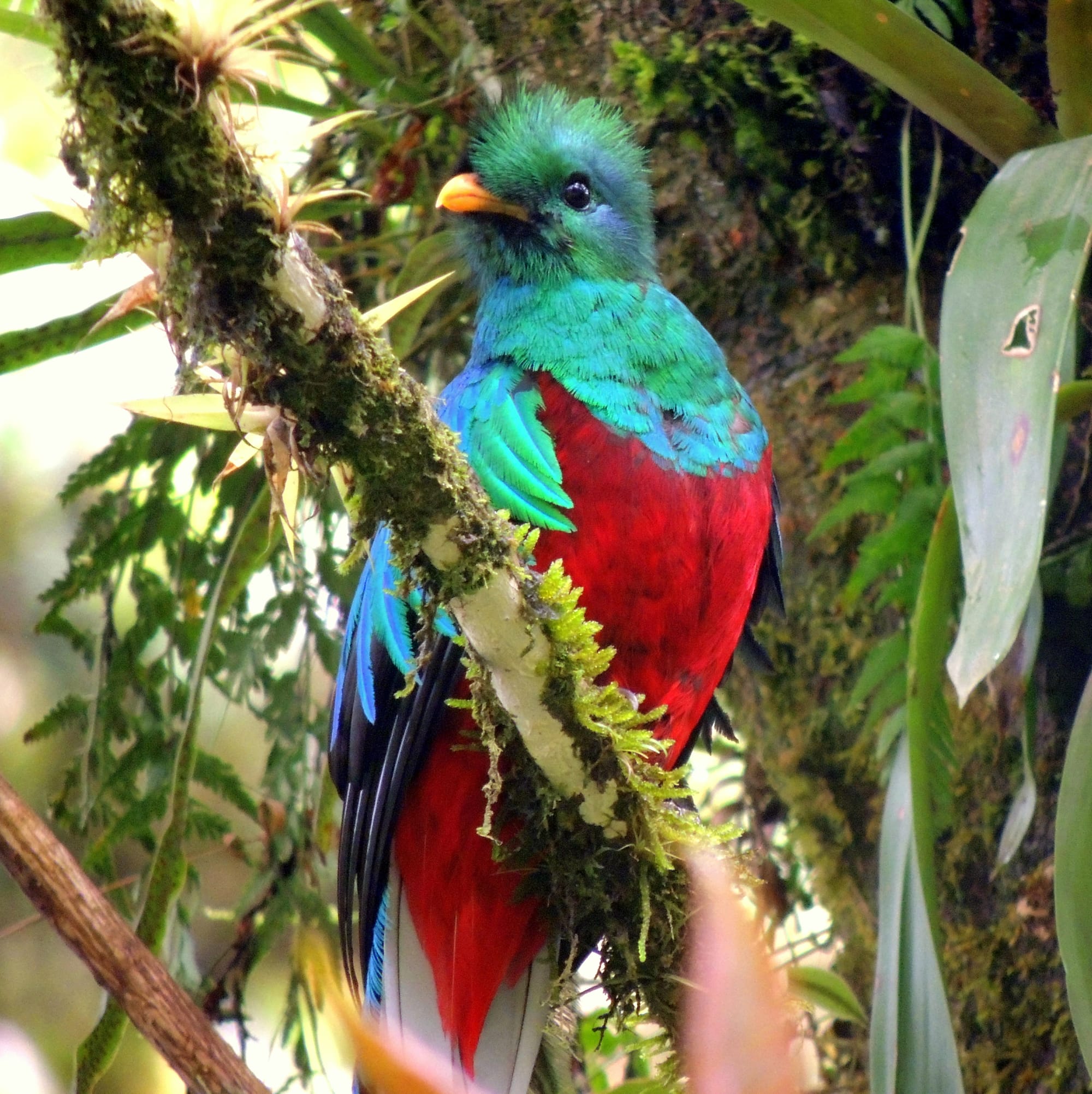
The Resplendent Quetzal (Pharomachrus mocinno) lives in montane forests from southern Mexico to western Panama. It is especially associated with cloud forest, the cool, wet, high-elevation habitat where mosses cover branches, mist moves through the canopy, and fruiting trees support an extraordinary web of life. Quetzals feed heavily on fruits, including wild avocados and other members of the laurel family, and in doing so they help move seeds through the forest. They are not just ornaments of the cloud forest. They are participants in its renewal.
They are also sensitive to its loss.
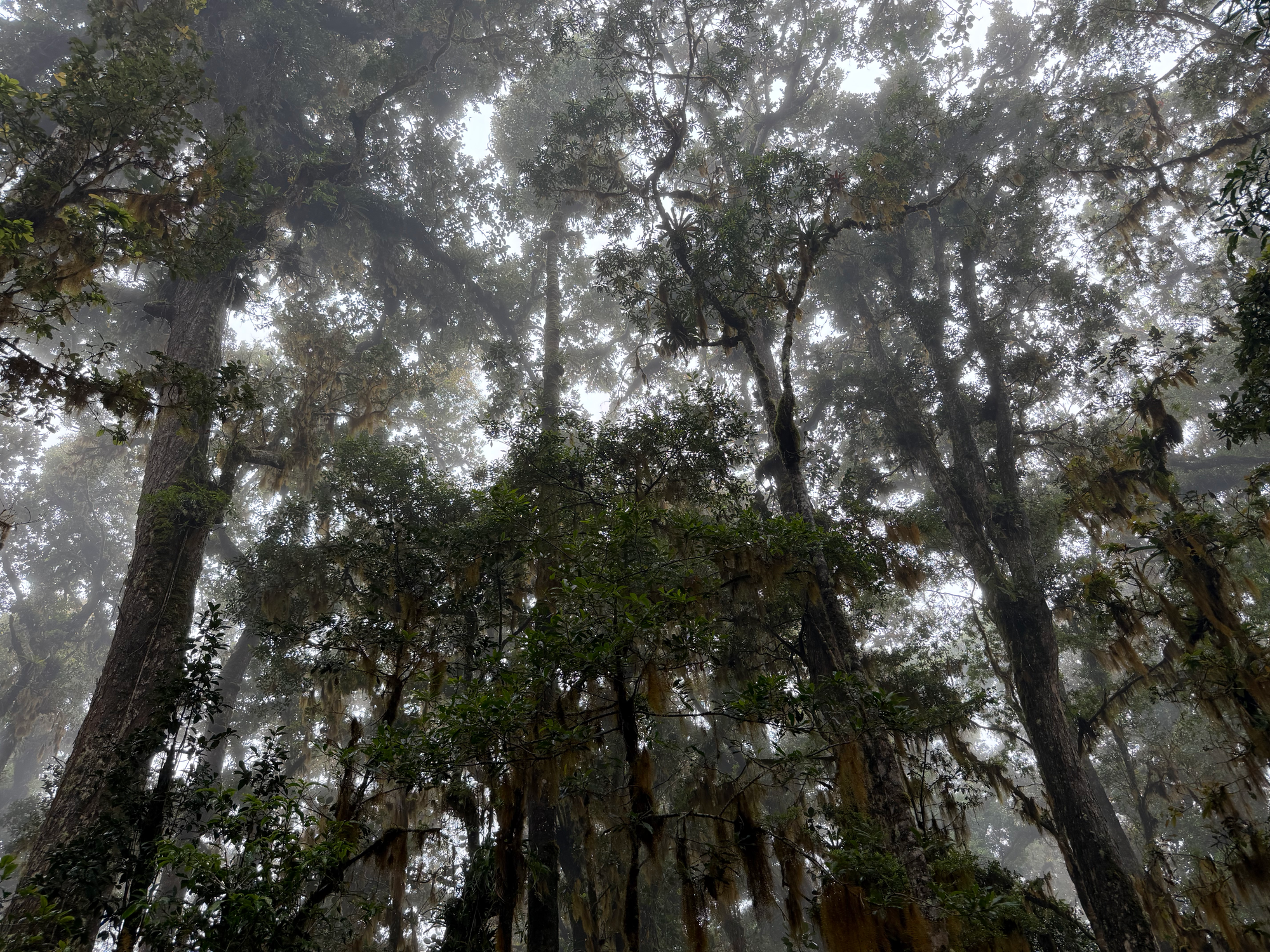
The quetzal is currently considered Near Threatened, largely because its forest habitat has been reduced, fragmented, or degraded. That matters because quetzal conservation is not as simple as protecting one beautiful patch of forest. These birds may depend on different elevations at different times of year, moving through a landscape of breeding sites, feeding areas, forest corridors, and seasonal resources. If those pieces become disconnected, the bird can disappear even from places where some forest remains.
This is one reason the Quetzal Education and Research Center (QERC) is important. Located in San Gerardo de Dota in Costa Rica’s Talamanca highlands, QERC sits in one of the landscapes most closely associated with the Resplendent Quetzal. The bird is not only on the center’s sign. It is part of the reason the place exists.
Recently, a salvaged Resplendent Quetzal from the region gave us an unexpected opportunity. From that specimen, our team generated the first comprehensive genome assembly for the species and the first genomic resource for quetzals. That may sound like a technical milestone, and it is. But its conservation significance is much larger.
A reference genome is something like a biological map. It does not, by itself, conserve a species. But it gives researchers a way to ask better questions. How much genetic diversity remains in different quetzal populations? Are cloud forest fragments still connected by gene flow, or are populations becoming isolated? Are there signs of inbreeding in small populations? Could non-invasive samples, such as feathers or feces, eventually help identify individual birds without disturbing them? Are there genes associated with traits such as diet, elevational movement, or thermal tolerance that may become important as cloud forests shift under climate change?
Those questions matter because conservation decisions are often made in landscapes where time is short and information is incomplete. The quetzal’s beauty has made it famous, but fame is not the same as knowledge. To protect the species well, we need field observations, habitat studies, community partnerships, and genomic tools working together.
That is the next step. The genome gives us a new foundation, but the real work is still in the forest: identifying nesting resources, mapping habitat corridors, understanding seasonal movement, monitoring populations, and working with the people who live alongside the bird.
The Resplendent Quetzal reminds us that conservation begins with wonder, but it cannot end there. At some point, admiration has to become attention. Attention has to become knowledge. And knowledge has to become care for the places that allow such a bird to remain possible."
For “Further Reading,” I would suggest:
Powell, G. V. N., and Bjork, R. D. “Implications of altitudinal migration for conservation strategies to protect tropical biodiversity: a case study of the Resplendent Quetzal Pharomachrus mocinno at Monteverde, Costa Rica.” Bird Conservation International. This is the classic conservation-connectivity paper for quetzals in Costa Rica. Cambridge University Press
Solórzano et al. “Conservation priorities for Resplendent Quetzals based on analysis of mitochondrial DNA control-region sequences.” The Condor / Ornithological Applications. This supports the point that quetzal conservation has a population-structure and regional-management dimension.