
Guts, Gourds, and Gordonia: A Halloween Discovery


What happens when you mix a lab lunch, a pumpkin-carving contest, and a group of microbiologists?
Halloween is a time for ghosts, goblins, and things that go bump in the night. Around the Microbiomics and Culturomics Core Facility (MCCF) at Oklahoma State University, we decided to celebrate with something a little more appropriate for a group of microbiologists: pumpkins, pizza, and an afternoon of lab bonding.
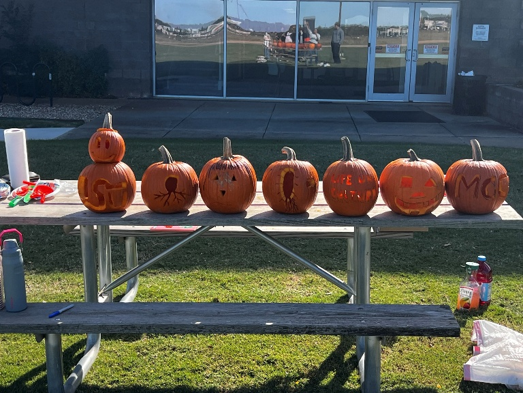
On October 31, 2025, our team traded pipettes for carving tools during a Halloween lab lunch and pumpkin-carving activity. There were some creative designs, a few questionable artistic decisions, and enough pumpkin guts to keep a microbiologist entertained for the foreseeable future. But one pumpkin held a surprise.
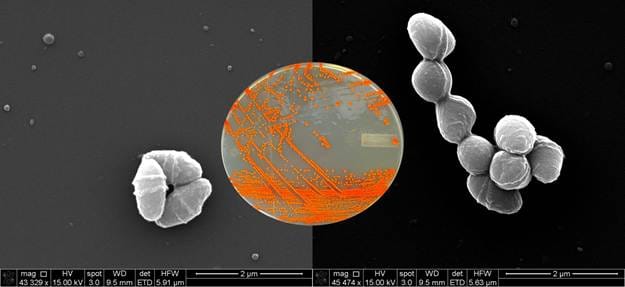
From the fleshy tissue of the pumpkin's mesocarp, we recovered an orange-pigmented bacterium that we affectionately named Orange1. What started as a fun afternoon with the MCCF team had unexpectedly become a full year of microbial discovery. Apparently, even lunch breaks can turn into research projects.
Orange1 belongs to the bacterial genus Gordonia, a group of bacteria found in a variety of environments, including soil and other organic-rich habitats. Members of this genus are known for diverse metabolic capabilities and, in some cases, for breaking down complex organic compounds.
Orange1 also has a rather noticeable calling card: its bright orange colonies. That splash of color made the isolate especially memorable.
One of the things I enjoy most about microbiology is that discoveries don't always begin with elaborate experiments or trips to far-flung places. Sometimes they start with an ordinary activity, a curious observation, and someone willing to investigate a little further.
For the MCCF, our Halloween lunch was intended to be a chance to step away from the bench, enjoy some food, and spend time together outside our usual day-to-day work. We came away with some memorable pumpkins, a few laughs, and an isolate that may eventually earn its place among the formally recognized species of Gordonia.
Not a bad return on a pumpkin-carving afternoon.
Orange1's story is still being written, and we'll have more to share as its formal description progresses. Until then, it serves as a colorful reminder that microbial diversity is all around us … even in places where we least expect it.
So, the next time you're carving a pumpkin, take a moment to appreciate what's hiding in those guts. You never know what might be growing there.
Happy Halloween, and remember … when life gives you pumpkins, check the mesocarp.


